Dating again after a high-conflict relationship
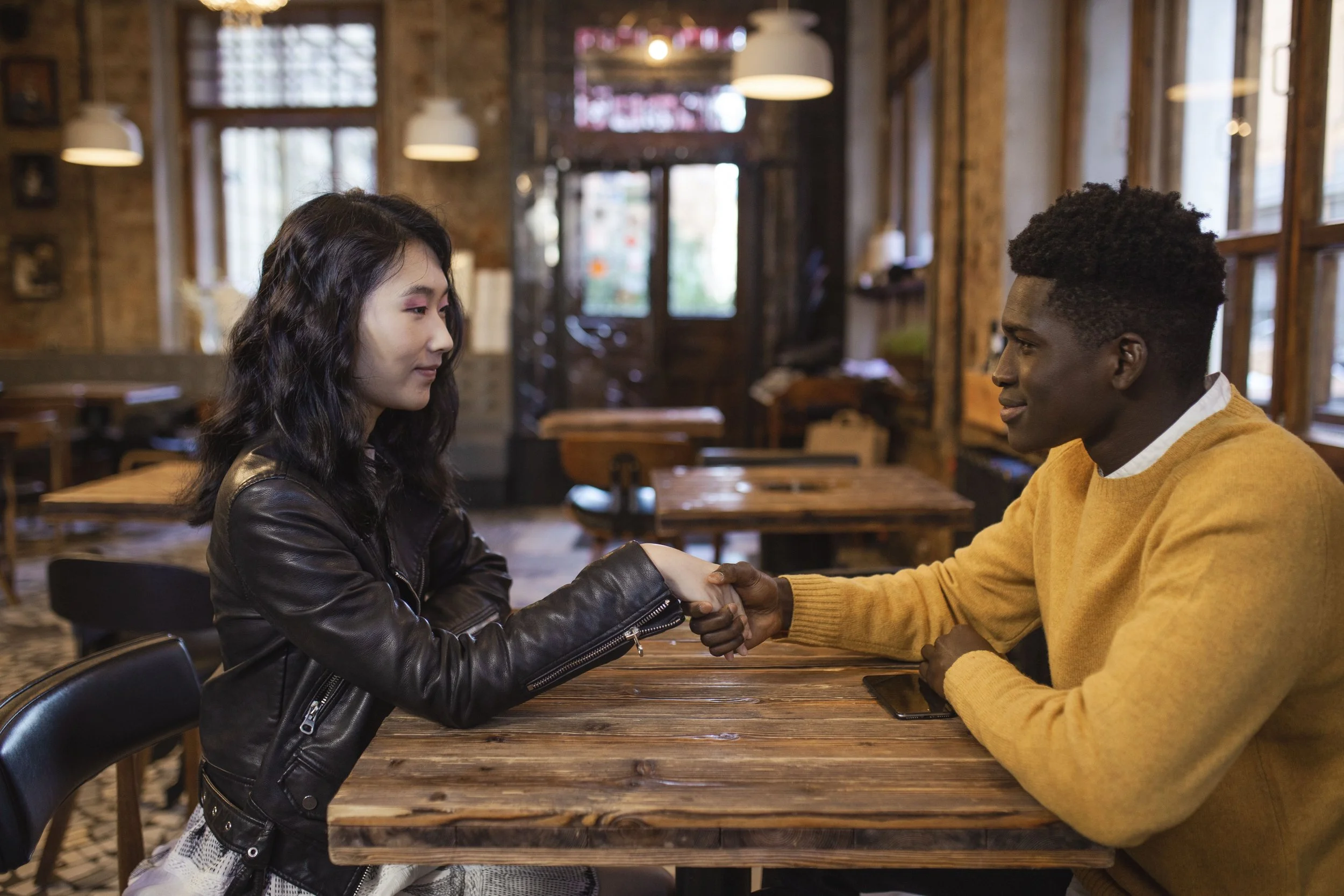
Photo by cottonbro studio on Pexels
Dating again after a high-conflict relationship is less about technique and more about readiness, and readiness has observable signs: you can be alone without it feeling like an emergency, you can describe your last relationship without your body flooding, and you're drawn to someone's actual qualities rather than to the relief of not being alone. If those aren't in place yet, the risk isn't that dating will fail. The risk is that it will work, quickly, with someone who feels compellingly familiar, because familiarity is precisely what an old pattern feels like from the inside.
This isn't dating advice. There's no shortage of that. This is about what comes before any of it.
The readiness question, honestly
There's no correct waiting period, and I'm suspicious of formulas that assign months per year of marriage. Time matters less than state.
Some questions worth sitting with rather than answering fast. Can you spend a weekend alone with something like contentment, or is aloneness still a thing you're escaping? When you imagine a new partner, are you imagining a person or a solution? Has your last relationship become a story you can tell, or is it still an argument you're having?
None of these requires perfection. A man fully at peace with everything is a man who's stopped paying attention. What they're screening for is whether dating would be an addition to a life that's standing, or a load-bearing wall in one that isn't. New relationships asked to hold a man up tend to buckle, and after a high-conflict marriage the buckling has extra costs, because your trust reserves are already low. I've written about that depleted trust in Learning to trust your judgment after emotional manipulation.
Why the familiar pulls
Here's the uncomfortable part, and the reason this article exists.
Men leaving high-conflict relationships often expect the experience to sharpen their radar. Sometimes it is. Just as often, something stranger happens: the new person who feels most immediately compelling, most electric, most like “finally, someone who gets me,” turns out to run on dynamics uncannily like the old ones. Intensity gets read as chemistry. Early idealisation gets read as being truly seen. The drama of rupture and repair gets read as passion.
The plain explanation is that we're drawn to what we know. Relational patterns learned early and reinforced for years function like a native language, and a person who speaks it feels like home even when home was hostile. Calm, by contrast, can initially register as boring, or even as suspicious. More than one man has told me that a genuinely kind woman made him inexplicably uneasy, and that the unease faded over months as his system recalibrated to the absence of threat.
So the guidance isn't “trust your gut” or “ignore your gut.” It's subtler. A strong immediate pull, especially early on, is information to examine rather than a green light. The deeper mechanics of why patterns repeat, and what actually changes them, get their own article in How to avoid repeating the same relationship pattern.
What going slow concretely means
“Take it slow” is universally recommended and rarely specified. Here's a working specification.
Slow means the relationship's pace is set by evidence, not feeling. You extend trust as it's earned across situations and time, including a disagreement or two, rather than granting it all in week one because the feeling is strong. When the feeling is strong, pacing matters most.
Slow means keeping the rest of your life running at full speed. Friends still see you. Commitments still happen. A new relationship that rapidly consumes your calendar is moving too fast, whatever the tempo of anything else.
Slow means watching how conflict goes before deepening anything. Not whether conflict happens, since it will, but whether repair happens. Can she hear a no? Can you give one? After a high-conflict relationship, your ability to voice a boundary and have it simply respected may be the single most diagnostic experience available to you.
Slow means introductions to your children, if you have them, come late and deliberately. That subject deserves care beyond this article's scope.
And slow means noticing your own state, week to week. Are you more yourself around this person, or less? Steadier, or more vigilant? Your body is keeping records either way. The longer arc this all belongs to is mapped in the guide to rebuilding after separation.
What to do next
If you recognise the pull toward the familiar and want to work on it before or while dating, that's precise, individual territory, and it's what coaching is for.
This article doesn't urgently need an external referral, with one exception. If early dating is surfacing distress that feels bigger than the situation, old and outsized, that's worth taking to a counsellor or psychologist rather than around another loop. Your GP can arrange the referral.
Written by Rudi Doku, a Melbourne-based Somatic Experiencing Practitioner, IFS-trained practitioner and Certified Integral Coach who works with men navigating separation, relationship breakdown and high-conflict transitions.